Securing reliable HVAC Lancaster, TX homeowners can count on ensures indoor climate safety when triple-digit summer heatwaves strain compressors and winter cold fronts push gas furnaces to their limits. Our field technicians focus on transparent diagnostics and repair-first mechanical troubleshooting to get failing air conditioners and heating equipment running without unnecessary delays.
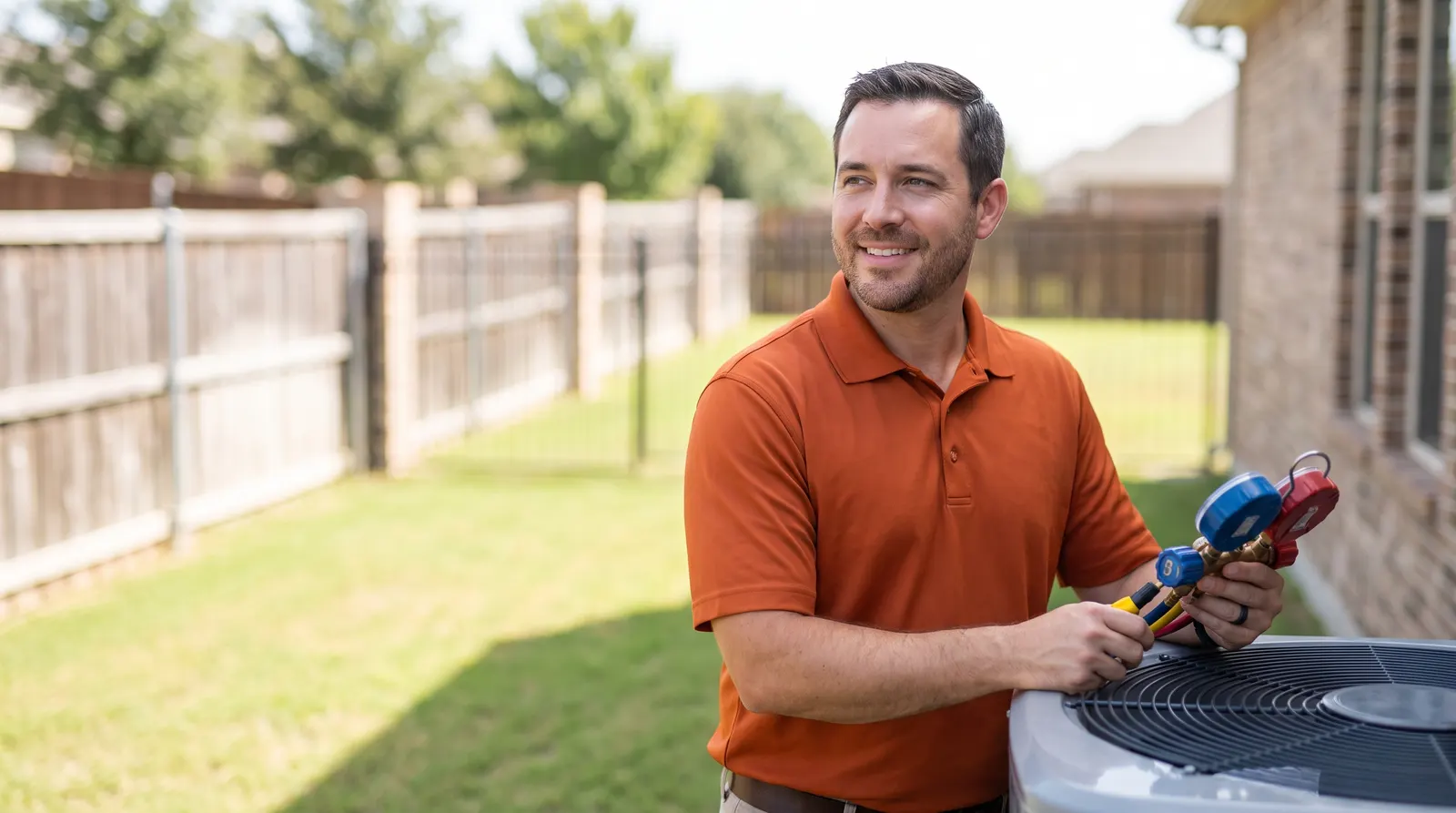
An HVAC company in Lancaster, TX is a licensed mechanical contractor that evaluates, repairs, balances, replaces, and maintains residential and commercial heating, ventilation, and air conditioning systems across Dallas County.
Every service reflects the same meticulous attention to detail, whether it's a single job or a larger hvac project across Lancaster.
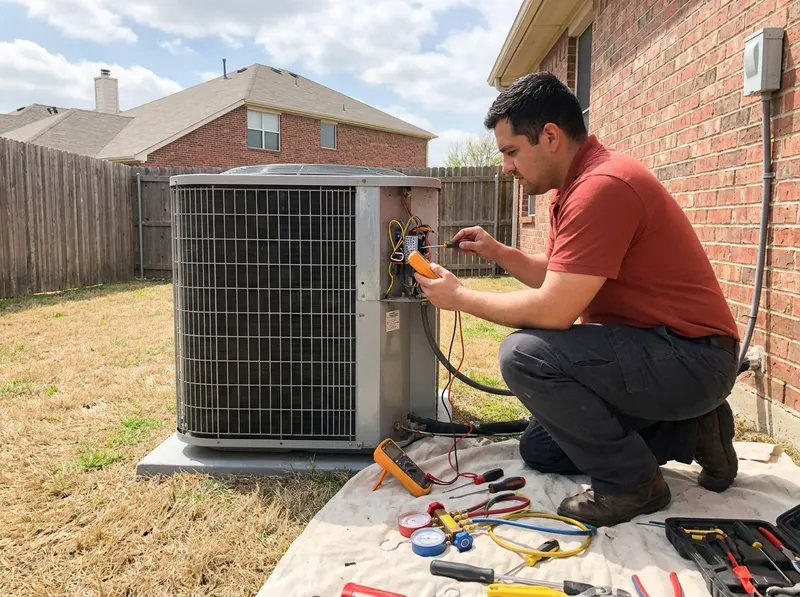
When an air conditioner blows lukewarm air, trips the circuit breaker, or shuts down during severe North Texas heat, rapid diagnostic triage is essential to protect indoor safety. Technicians systematically inspect high-failure electrical components including dual-run capacitors, contactors, relays, transformer fuses, and safety float switches. Field testing measures compressor winding resistance, fan motor operating amperage, and temperature splits across the evaporator coil to pinpoint exact mechanical failures. If an evaporator coil is iced over, crews safely thaw the system, clear blocked condensate trap assemblies, and check operating pressures for refrigerant undercharge. Every diagnostic visit ends with an itemized, written repair plan before any component is replaced, ensuring homeowners never encounter unexpected mechanical charges.
Get a quote →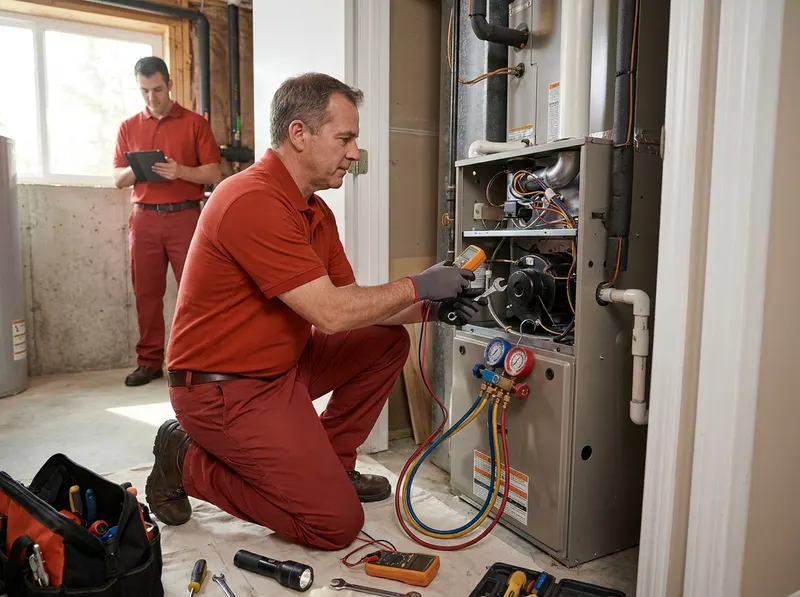
Winter cold snaps across Dallas County demand immediate, safe heating performance from residential gas furnaces and electric air handlers. Mechanical heating repairs address cracked hot surface igniters, malfunctioning flame sensors, faulty draft inducer blowers, sticking gas valves, and tripped high-limit safety switches. Technicians conduct combustion safety testing to measure flue gas ventilation and inspect the primary and secondary heat exchangers for micro-fractures that could allow dangerous carbon monoxide leakage into indoor living areas. For electric heating systems, crews inspect sequencers, restringing broken heating elements, and verify that multi-stage heat strips engage safely without overloading the electrical distribution panel.
Get a quote →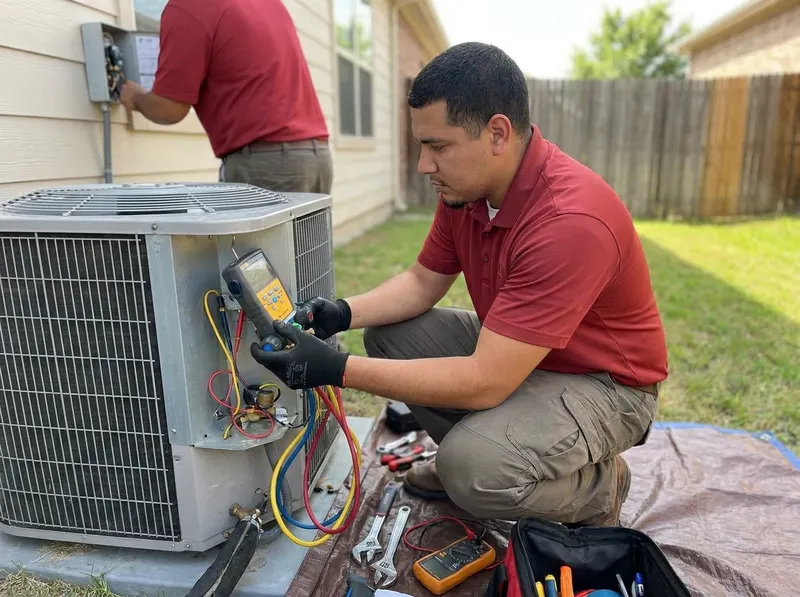
Heat pump systems provide efficient year-round comfort across Lancaster by reversing thermal transfer between seasons, but require specialized calibration to operate efficiently during severe temperature swings. Field technicians diagnose stuck four-way reversing valves, malfunctioning defrost control boards, outdoor ambient thermistors, and electronic expansion valves (EEVs). We balance refrigerant charge using exact subcooling and superheat formulas to ensure seamless heating transitions during freezing conditions and optimal cooling output during summer peaks. Routine service verifies that auxiliary electric heat strips engage only when necessary, preventing high winter energy consumption caused by uncalibrated defrost cycling.
Get a quote →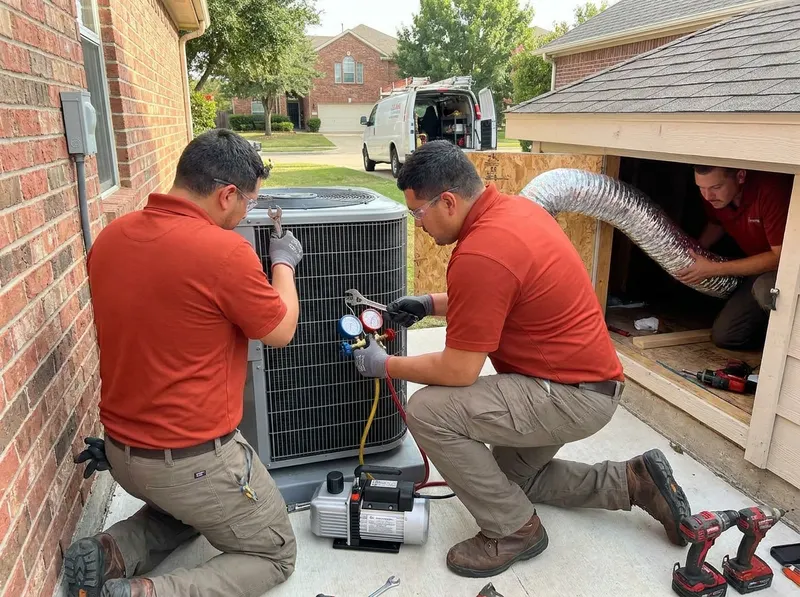
When an outdated condenser or furnace reaches the end of its serviceable lifespan, installing a correctly matched split system or heat pump restores reliable efficiency and indoor humidity control. System sizing follows strict Manual J residential load calculation standards, accounting for local solar orientation, ceiling heights, window ratings, and attic insulation levels across Lancaster neighborhoods. Technicians safely recover legacy refrigerants, set new vibration-dampened composite condenser pads, braze copper line sets with continuous nitrogen purges, and install high-efficiency evaporator coils. Every installation includes code-compliant mechanical permitting, digital thermostat integration, and thorough airflow testing to meet modern SEER2 efficiency guidelines.
Get a quote →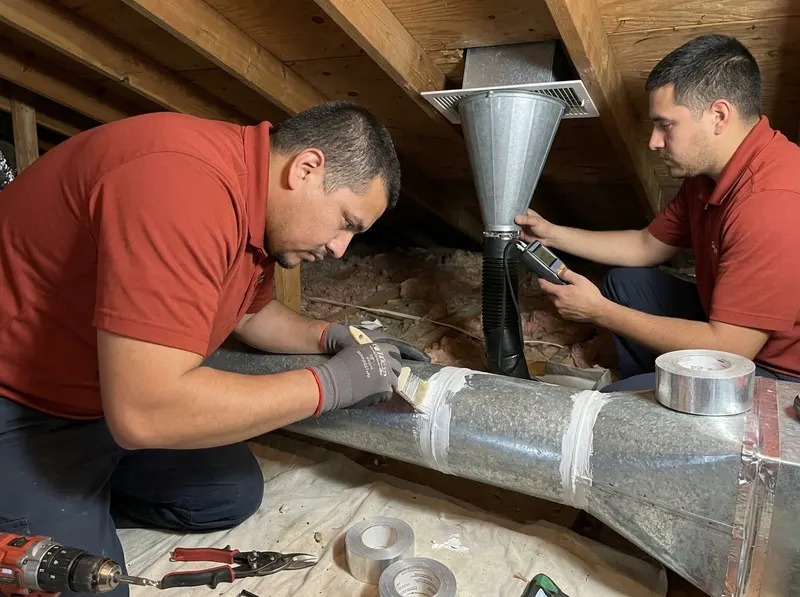
Attic duct systems in North Texas are exposed to extreme summer thermal loads exceeding 140 degrees Fahrenheit, which quickly degrades standard duct tape, mastic seals, and outer insulation jackets. Leaky return ducts pull superheated attic dust and humidity into the air stream, while disconnected supply runs dump cooled air directly into unconditioned roof spaces. Technicians inspect attic duct runs to identify crushed flex ducts, restricted radius turns, and disconnected plenum collars. We reseal critical joints using fiber-reinforced mastic paste, replace deteriorated R-6 flex ducts with high-efficiency R-8 insulated ducting, and adjust balancing dampers to ensure equalized static pressure and uniform room temperatures throughout the residence.
Get a quote →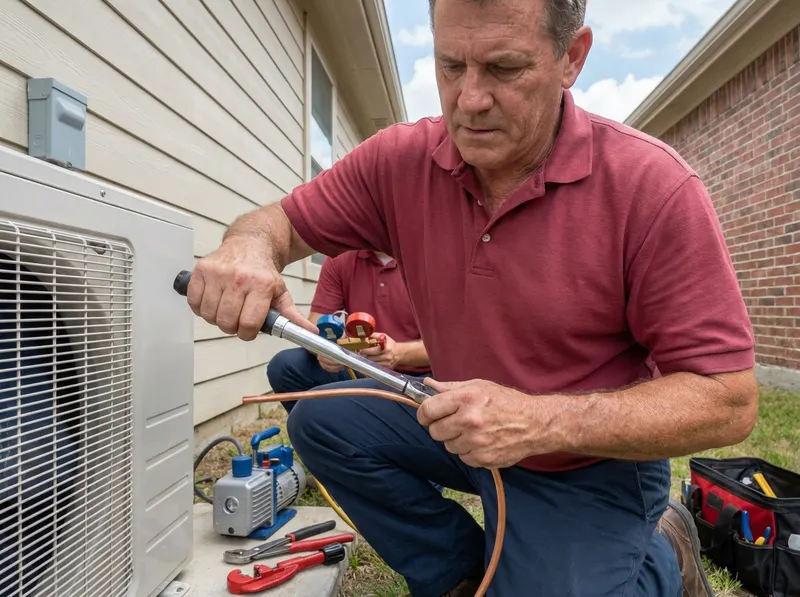
Ductless mini-split heat pumps offer targeted, highly efficient temperature regulation for master suites, garage workshops, sunrooms, and historic Lancaster properties lacking attic duct clearance. These inverter-driven systems modulate compressor output in small increments to maintain precise room temperatures with ultra-low electrical consumption. Technicians evaluate wall placement, drill precision line-set penetrations, pull deep vacuums down to under 500 microns, and wire dedicated 208/230V disconnect switches. Mini-split service also includes cleaning indoor blower wheels, sanitizing condensate drain lines, and troubleshooting multi-zone communication control boards.
Get a quote →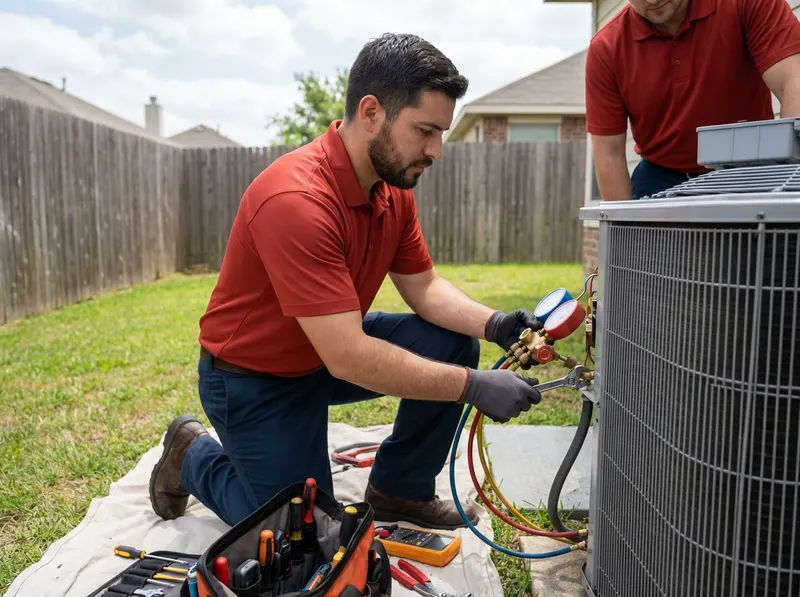
Comprehensive preventive maintenance prevents sudden breakdown calls during the hottest and coldest weeks of the year. Spring cooling maintenance involves deep chemical washing of outdoor condenser coils to remove grass clippings, silt, and cottonwood debris, cleaning condensate drain lines with anti-algae treatments, checking contactor points for pitting, and measuring capacitor microfarad ratings against manufacturer tolerances. Autumn heating tune-ups focus on cleaning burner assemblies, checking thermocouple and flame sensor outputs, testing flue draft velocity, and testing safety limit switches. Regular tune-ups extend compressor longevity, preserve equipment manufacturer warranties, and lower monthly electrical bills.
Get a quote →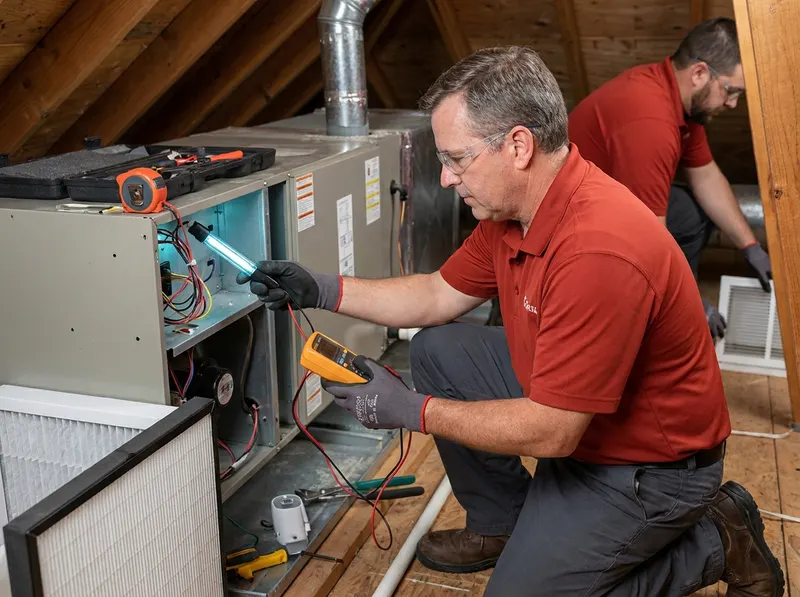
High pollen counts, airborne dust, and seasonal humidity shifts across North Texas can degrade indoor air quality and create heavy particulate buildup on indoor evaporator coils. We evaluate home filtration needs and install whole-house media air cleaners, high-MERV filter cabinets, bypass humidifiers, and germicidal ultraviolet (UV-C) lamps directly inside the air handler plenum. Upgrading from standard 1-inch fiberglass filters to deep 4-inch or 5-inch pleated media filters captures microscopic allergens, mold spores, and pet dander while significantly reducing static pressure resistance against the blower motor.
Get a quote →You get a firm, itemized quote for your hvac before any work begins, no surprises, no pressure.
Careful prep, tidy work, and a full cleanup when we are done. We treat your home and belongings like our own.
The same trusted, background-checked team from the first call to the final check.
Choosing the appropriate mechanical solution for a home in Lancaster depends on equipment age, refrigerant classification, ductwork integrity, and structural heat load requirements across your floor plan. If your cooling system is under ten years old and suddenly stops cooling during an afternoon heat spike, choose component-level AC repair. Replacing a blown dual-run capacitor, contactor switch, hard-start kit, or condenser fan motor quickly restores operation at a fraction of replacement cost. If your equipment is over twelve to fifteen years old, still operates on phased-out R-22 Freon, or has suffered a catastrophic compressor burnout, choose a full system replacement with a modern 14.3 to 18 SEER2 split system or inverter heat pump. The trade-off is committing to a higher upfront capital investment versus avoiding recurring diagnostic fees, rising electric utility bills, and expensive legacy refrigerant top-offs.
If your home experiences persistent hot spots in upstairs bedrooms or rooms facing the afternoon sun along the Houston School Road Corridor, choose dedicated ductwork modification and static pressure balancing. Sealing disjointed flex duct joints in the attic and adding dedicated return-air pathways directly addresses airflow resistance without demanding larger tonnage. If you need targeted heating and cooling for an un-ducted home addition, detached garage workshop, or enclosed patio near Bear Creek Nature Park, choose a multi-zone ductless mini-split system. The trade-off is mounting dedicated wall-mounted air handlers inside living spaces rather than concealing air distribution within existing attic crawlspaces.
Every project gets a firm, written price after a free on-site visit. Ranges below for orientation.
Tell us about your hvac job and we'll send a clear, written quote, usually the same day. Or just call and talk to a real Lancaster pro.
(945) 788-3616
Lancaster properties present distinct heating and cooling challenges shaped by regional geology, architectural diversity, and Dallas County weather extremes. Neighborhoods surrounding the Historic Town Square District feature vintage architectural layouts with tight attic clearances, legacy gas piping, and undersized return-air chases that require careful airflow engineering during system upgrades. Meanwhile, modern subdivisions along the Houston School Road Corridor, Pleasant Run Estates, and Rolling Hills feature spacious open-concept floor plans and vaulted ceilings that place elevated thermal demands on central air handlers during sustained 100-degree summer afternoons. The highly expansive blackland clay soil found throughout the Ten Mile Creek basin, Bear Creek Nature Park, and areas surrounding Lancaster Regional Airport undergoes drastic volumetric shifts between wet spring months and bone-dry summer droughts. This continuous ground movement causes subtle foundation settling that frequently shifts outdoor concrete condenser pads, stressing copper refrigeration lines, loosening brazed fittings, and causing gradual refrigerant loss. Furthermore, sudden shifts in static line pressure can pull at flexible attic duct runs, tearing mastic seals and allowing superheated 140-degree attic air to enter the home's supply airstream. Winter operating conditions present equally sharp demands when arctic cold fronts sweep rapidly across the flat terrain near Roy Orr Trail and Dallas College Cedar Valley Campus. Temperatures can plummet 40 degrees within hours, putting instant operational stress on furnace ignition systems, gas valves, and heat pump defrost controls. Local HVAC systems must be precisely calibrated to switch seamlessly between extreme cooling loads and sudden heating demands without short-cycling, over-pressurizing ductwork, or driving electric utility bills to unsustainable levels.
Free estimates for Lancaster & the surrounding area.
 Metro HVAC Comfort